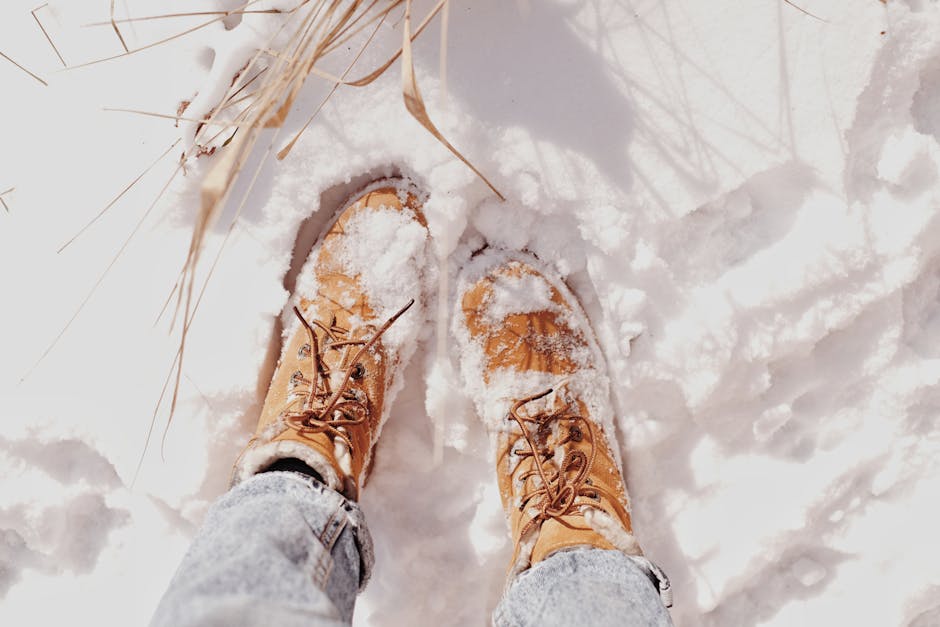
It is currently ninety-two degrees outside and my air conditioner is making a sound like a dying lawnmower, but I am sitting here staring at a pair of La Canadienne shearling-lined waterproof boots. My husband thinks I’ve finally lost it. He’s probably right. But while everyone else is out buying overpriced linen shorts that will fall apart by Labor Day, I’m securing my survival for January at a 60% discount. Buying winter boots in the summer isn’t just a ‘hack’—it’s the only way to actually get quality without getting fleeced by the seasonal markup machine.
Most people wait until the first flurry hits to realize their old boots have a hole in the sole. Then they panic. They run to Nordstrom or hop on Zappos and buy whatever is left in a size 8. Usually, it’s some overpriced, clunky mess that doesn’t even have a proper gusseted tongue. I know this because I lived it. Back in November 2021, Chicago got hit with a surprise eight-inch dumping of slush. I was wearing loafers like an idiot. I ran to the nearest shop and dropped $210 on a pair of Sorel Caribous because that’s all they had left. By January, the rubber had cracked near the flex point of my toes and my socks were perpetually damp. I paid premium prices for leftover inventory that wasn’t even built to last three months. I felt like a total amateur.
Buying boots in the winter is like buying a fire extinguisher while your kitchen is already on fire. You have no leverage. You have no choice. You just pay the man and hope for the best.
The November Panic is a total scam
Retailers know you’re desperate when the temperature drops below forty. I’ve actually tracked this—yes, I have a spreadsheet because I’m that person—and the price fluctuation is offensive. I followed the Pajar Canada ‘Toscana’ boot for an entire year. In December, it was firm at $450. In late July, I found the exact same model, same color, for $185 on a clearance site. That’s a 58% difference for the exact same piece of leather and rubber.
What I mean is—actually, let me put it differently. You aren’t just saving money; you’re getting better stuff. In the summer, the ‘good’ inventory from the previous high-end production runs is being cleared out to make room for the new, often cheaper-made ‘trend’ boots. I’d much rather have a three-year-old model from a heritage brand than this year’s fast-fashion iteration that uses ‘vegan leather’ (which is just plastic that makes your feet sweat) to cut costs.
I might be wrong about this, but I honestly think the ‘new arrivals’ in October are lower quality than the stuff they hide in the back during the summer. I’ve noticed the stitching density on some major brands—I’m looking at you, Steve Madden—seems to get sloppier during the peak rush. They’re just trying to meet demand. Buying off-season lets you pick through the leftovers of the high-quality batches.
I know people love them, but I hate your favorite boots

I’m going to say it and I know I’ll get emails: Hunter boots are useless in the winter. I actively tell my friends to stop buying them for snow. They are rain boots. Rubber is a natural conductor of cold. Unless you’re buying the $50 shearling inserts (which then make the boots too tight), your feet are going to be blocks of ice within twenty minutes. It’s a fashion crime against your own toes. I don’t care how cute the red ones look in a photoshoot. They’re glorified buckets for your feet.
While we’re at it, can we talk about UGGs? I have a weird, irrational hatred for the classic UGG boot. Not because they aren’t warm—they are—but because the lack of structural support makes everyone walk with that weird inward-leaning ‘duck’ gait after three weeks. Plus, the soles have the traction of a banana peel. I’ve seen more people wipe out on black ice wearing UGGs than any other shoe. If you’re shopping in the summer, look for brands that actually understand traction. Look for Vibram soles. Look for Arctic Grip.
Anyway, back to the point. When you shop in July, you can actually afford the brands that don’t suck. I’m talking about La Canadienne, Aquatalia, or even higher-end Merrells. These brands rarely go on sale in the winter, but in the summer? They’re practically giving them away because nobody wants to think about GORE-TEX when it’s humid out.
Pro tip: If the boot doesn’t specify a temperature rating (like -20°C/-4°F), the manufacturer doesn’t trust it. Don’t buy a winter boot that doesn’t brag about its specs.
How to actually do this without getting burned
Shopping off-season requires a different brain. You can’t just browse. You have to hunt. I have three specific rules I follow every July when I start my ‘boot scouting’ missions.
- Check the secondary luxury sites: Places like The Outnet, Rue La La, and even the ‘Last Call’ sections of high-end department stores. They are desperate to move winter inventory in July to make room for ‘Pre-Fall’ collections.
- Ignore the trends: If you see a boot with a weirdly specific 2024 trend—like a massive 5-inch neon platform—skip it. It’ll look dated by the time the snow actually falls. Stick to the classics: Chelsea silhouettes, lace-up combat styles with shearling, or sleek waterproof suede.
- The Sizing Trap: Remember that you’ll be wearing thicker socks. When I’m trying on boots in a 90-degree bedroom, it’s easy to forget that. I keep a pair of my heavy wool Darn Tough socks in my nightstand just for summer boot fitting. It feels ridiculous to put them on when I’m sweating, but it’s necessary.
I once bought a pair of beautiful Italian leather hiking boots in August. They were a steal—$120 down from $400. I tried them on with thin no-show socks, thought they were perfect, and tucked them away. December rolled around, I put on my thickest wool socks, and I couldn’t even get my heel past the throat of the boot. I ended up having to sell them on Poshmark for a loss. I still think about those boots. They were a deep forest green with red laces. Total heartbreak.
The ‘Welt’ is more important than the leather
People get obsessed with ‘genuine leather.’ Newsflash: ‘genuine leather’ is actually a grade of quality, and it’s a pretty low one. It’s basically the plywood of the leather world. You want ‘full-grain’ or ‘top-grain’ if you’re fancy, but honestly, for winter, the construction matters more.
If the sole is just glued onto the upper, it’s going to fail. Salt, slush, and temperature changes eat glue for breakfast. A cheap boot sole is like a sponge that hates you—it will eventually soak up the brine from the sidewalk and deposit it directly onto your heel. You want a Goodyear welt or at least a heavily stitched sole. You can see the stitching around the perimeter of the boot. If it’s just a smooth seam where the rubber meets the leather, move on. It’s a disposable shoe.
I know some people say that modern adhesives are just as good as stitching. I disagree. I’ve had too many soles flap open like a talking mouth in the middle of a commute to ever trust glue again. It’s embarrassing and it’s cold.
One more thing: look at the tread depth. I want at least 4mm of lug depth. If it looks like a sneaker sole, you’re going to be sliding into traffic. I measured my current favorites—a pair of Olang boots I got for $90 in June—and they have a 6mm tread with pivoting ice grips. That’s the kind of overkill you can afford when you shop off-season.
The 3 AM eBay Strategy
This is my secret weapon. I don’t just shop retail. I shop ‘New Without Box’ on eBay and Poshmark in the dead of summer. People clean out their closets in the spring, find a pair of expensive boots they wore once, and list them for nothing just to get them out of the house.
Last July, I found a pair of Hanwag Tashi boots. These are heavy-duty, double-stitched mountain boots that usually retail for over $400. The seller had them listed for $110 because ‘it’s too hot to look at these.’ I offered $90. They accepted within five minutes. That’s the power of the summer boot hunt. People are emotionally disconnected from their winter gear when they’re wearing flip-flops. Take advantage of that emotional detachment.
Is it weird to have a closet full of heavy boots while the cicadas are screaming outside? Maybe. But when that first ‘Polar Vortex’ headline hits the news and everyone else is crying over $300 price tags for mediocre shoes, I’ll be sitting pretty in my half-off shearling.
I sometimes wonder if I’m just hoarding leather at this point. I have six pairs of winter boots and I live in a city that only really has three months of ‘real’ snow. Do I need the seventh pair I just saw on sale? Probably not. But then I think about those wet socks in 2021 and I click ‘Add to Cart.’
What’s the best deal you’ve ever scored when the weather was completely wrong for the purchase? Or am I the only one who finds this therapeutic?