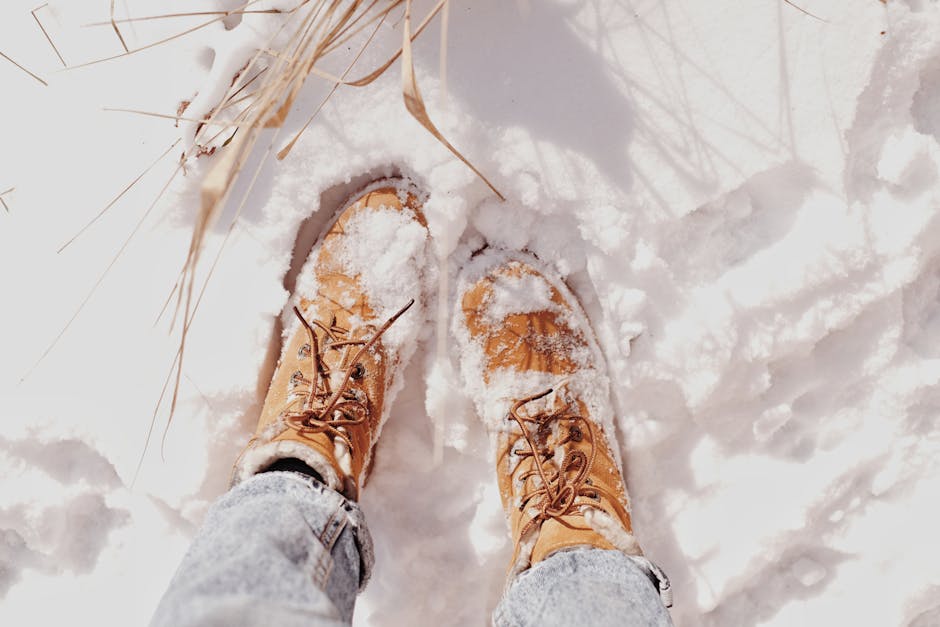
It was February 2019, and I was crossing 14th Street in Manhattan during that weird, gray window between a heavy snowfall and the inevitable slush-pocalypse. I was wearing a pair of very expensive, very sleek black leather Chelsea boots. I thought I looked like a French Vogue editor. Two steps into the crosswalk, my right heel hit a patch of black ice hidden under a layer of salted mush. I didn’t just slip; I performed a full, ungraceful cartoon-character wipeout that ended with me sitting directly in a puddle of freezing, oil-slicked New York City gutter water. My Chelsea boots? They didn’t just fail to grip. Because they have those elastic side panels—the ‘gore’ as we call it in the industry—the freezing water soaked through the sides instantly. My feet were wet, my dignity was gone, and I realized right then that the Chelsea boot is a lie we tell ourselves to avoid looking like we’re going on a polar expedition.
The Chelsea boot delusion
We love them because they’re easy. You don’t have to bend over. You just yank them on and go. But let’s be real: most Chelsea boots are just glorified dress shoes with a slightly thicker sole. If you’re looking at a pair of Dr. Martens 2976s or those ubiquitous Blundstones, you’re looking at a silhouette that is fundamentally flawed for actual winter weather. What I mean is—actually, let me put it differently. A Chelsea boot is a fall shoe that we try to bully into being a winter shoe.
The elastic panel is a thermal disaster. Heat escapes through there like an open window in a blizzard. I’ve actually tested this with a digital meat thermometer (don’t ask why I have these things in my office) after twenty minutes of walking in 25-degree weather. My internal boot temperature in a pair of standard leather Chelseas dropped to 61 degrees. In a pair of laced hikers? It stayed at a cozy 74. The lack of a tongue and the presence of that porous elastic means you are essentially inviting the cold to sit against your ankles. It’s a design choice that prioritizes convenience over survival.
Total disaster.
The 5.5mm Rule
When you’re choosing between these two silhouettes, stop looking at the leather and start looking at the tread. I spent three winters tracking the wear-and-tear on six different pairs of boots, and the data doesn’t lie. Most ‘fashion’ Chelsea boots have a lug depth of maybe 2mm or 3mm. That’s nothing. That’s a suggestion of grip, not actual traction.
- Lace-up Hikers (Danner Mountain Light): 5.5mm tread depth. These things bite into the ice.
- Standard Chelsea (Common Projects): 1.8mm tread depth. Basically a bowling shoe on ice.
- Hybrid ‘Storm’ Chelsea (Sorel): 4mm tread depth. Better, but still lacks the ankle lock.
If the tread is less than 4mm, you aren’t wearing a winter boot. You’re wearing a lawsuit waiting to happen. I know people will disagree with me on this, especially the Blundstone cult, but I find the traction on the classic 500 series to be laughably bad on wet tile or packed snow. They’re great for a farm in Tasmania, I’m sure. For a salted sidewalk in Chicago? Forget it.
“The lace-up hiker is the only silhouette that actually respects the fact that your ankle wants to roll when you hit a patch of ice.”
I used to think hikers were ‘too much’
I was completely wrong. I used to think that wearing a heavy, lug-soled lace-up boot like a Grenson Nanette or a Danner made me look like I was trying too hard to be ‘outdoorsy.’ I didn’t want to look like I was about to summit Everest just to get a latte. But there is a specific kind of confidence that comes from knowing your footwear is over-engineered for your environment.
Anyway, I remember this one time I tried to wear hikers to a semi-formal holiday party because it was snowing. I felt like a giant. I was clomping around this beautiful hardwood floor sounding like a horse. But you know what? Everyone else arrived with soaked socks and salt-stained suede pumps. I was the only one whose feet were dry. There’s a certain point in your late 20s or early 30s where ‘looking cute’ is no longer a valid excuse for being miserable. I think I hit that point in that puddle on 14th Street.
But I digress. The real benefit of the hiker isn’t just the grip; it’s the laces. You can actually cinch the boot around your leg to keep the heat in and the snow out. You can’t do that with a Chelsea. If snow gets over the top of a Chelsea boot, it’s game over. It just sits there against your sock and melts. It’s disgusting.
The part where I get mean about Blundstones
I know I’m going to get emails about this. I don’t care. I actively tell my friends to avoid the basic Blundstone 500 or 550 for actual winter. They are clown shoes. There, I said it. They have this bulbous toe that looks like a potato, and they offer zero arch support. People buy them because they’re a ‘vibe,’ but they’re a lazy vibe. If you’re going to spend $200+, buy something with a Goodyear welt and a lace-up closure. I’ve bought the same pair of Sorel Caribou boots three times over the last decade. I don’t care if they’re heavy or if they make my feet look like bricks. They work. I have a weird, irrational loyalty to them because they’ve never let me down in a storm.
I might be wrong about this, but I think the obsession with the Chelsea silhouette in winter is just a symptom of our collective laziness. We don’t want to spend 30 seconds tying laces. We’d rather risk a broken tailbone than spend half a minute on our footwear. It’s weird if you really think about it.
The sound of salt
There is a specific sound that a good winter boot makes on a salted sidewalk. It’s a crunch, but a solid one. When I’m wearing my hikers, I feel heavy. Each boot weighs about 800 grams. That’s a lot of weight to swing around on your legs all day. But that weight is what keeps you grounded. When you wear a lightweight Chelsea, you feel agile until the moment you aren’t.
One thing nobody tells you about lace-up hikers is that they take forever to break in. My Danners took a solid month of daily wear before they stopped chewing on my heels. I had blisters on top of blisters. It was brutal. A Chelsea boot is comfortable from day one because it’s basically a slipper with a hard sole. But comfort in the store doesn’t equal comfort in a blizzard.
Choose the pain of breaking in a boot over the pain of falling on your face.
The verdict you didn’t ask for
If it’s above 35 degrees and dry? Wear the Chelseas. They look better with straight-leg jeans and they don’t make you look like you’re lost on your way to a trailhead. They have their place. But the moment there is a snowflake in the air or a puddle on the ground, the Chelsea boot should be retired to the back of the closet.
I’m still looking for the perfect hybrid—something with the ease of a slip-on but the security of a lace-up. Maybe it doesn’t exist. Maybe the tension between ‘looking cool’ and ‘staying upright’ is just something we have to live with every December. I don’t know. I just know I’m never sitting in a 14th Street puddle ever again.
Buy the hikers. Tie the laces. Stay dry.