The budget watch market is 80% noise. Fashion brands with borrowed movements, hollow bracelets that rattle after three months, and acrylic crystals that fog before the first year is out. Then there’s the other 20% — brands that have been manufacturing watch movements since before your grandfather was born, now selling their entry-level work for $15 to $130.
This guide covers that second group.
Five watches. Three price tiers. No padding about “timeless style” or “making a statement.” Just the pieces that survive daily use, and exactly why they’re worth the money.
The Three Budget Tiers — and What Each One Actually Gets You
Budget watches don’t exist on a single spectrum from bad to good. They sit in three distinct tiers, and moving from one to the next means different tradeoffs — not just a higher price tag.
| Price Range | Crystal Type | Movement Type | Water Resistance | Best Use Case |
|---|---|---|---|---|
| Under $30 | Mineral or acrylic | Basic quartz | 30M (splash-proof) | Gym, travel, daily beater |
| $30–$80 | Mineral glass (Hardlex) | Quartz, sometimes automatic | 30M–50M | Daily casual, weekend, casual office |
| $80–$150 | Mineral or domed mineral | Quartz or entry automatic | 50M–100M | Work, events, smart casual |
The first tier is about pure function with zero pretension. The second is where genuine daily-wear watches live — durable enough for real use, presentable enough for most situations. The third tier is where watches start to not look like budget concessions.
What Actually Changes Between Tiers
Crystal and bracelet quality jump the most. Under $30, hollow-link bracelets and acrylic crystals are standard. Between $30 and $80, treated mineral glass becomes common — harder than standard mineral and more scratch-resistant than anything in the first tier. Above $80, solid-link bracelets stop rattling on the wrist, and the finishing on case edges becomes noticeably cleaner.
Movements don’t shift dramatically until you cross $150. In this budget range, you’re either getting a Japanese quartz movement — reliable, accurate to ±15 seconds per month — or a Chinese quartz movement that’s adequate but occasionally less consistent. The brand determines which you get, not the specific price within this window.
One Spec Nobody Mentions: Lug Width
The lug width determines whether you can swap straps. Standard widths — 18mm, 20mm, 22mm — have massive aftermarket options. A $12 NATO strap from any watch retailer can transform how a watch looks and feels. Proprietary or non-standard lug widths lock you into the stock strap indefinitely. Check this before buying. Most Timex and Seiko models use 20mm; that’s the most strap-compatible size in the affordable category.
Quartz Wins at This Budget. Full Stop.
Mechanical watch enthusiasts will push back on this. The disagreement is aesthetic, not practical. Below $150, automatic movements require servicing every five to seven years, drift ten to twenty seconds per day under normal conditions, and use lower-tolerance components than mid-range mechanicals. Quartz movements at this price are accurate to within a second per day, need only a battery change every two to four years, and require no other maintenance. Unless the satisfaction of a self-winding mechanism is the actual point for you — and that’s a legitimate preference — quartz is the right call at this budget.
The Specs That Determine Whether a Watch Lasts Three Years or Three Months
Most buyers focus on dial design. The specs that determine longevity never appear in product photos.
Crystal Material: The Scratch Problem in Plain Language
Watch faces come in three materials. Acrylic crystal scratches with a fingernail but can be polished back to clarity with metal polish and a cloth. Common on very cheap watches and vintage pieces where the soft look is intentional. Mineral glass resists casual scratches and is standard on most watches between $30 and $150. It chips under hard impact rather than scratching gradually. Seiko markets their proprietary treated mineral glass as “Hardlex,” which sits near the top of the mineral category. Sapphire crystal is the hardest watch glass available — scratches only against concrete or other sapphire. It’s rare below $150, appearing mainly in select Chinese-made watches where it’s used as a cost-cutting differentiator.
If the watch is going on a wrist that does physical work, Hardlex or equivalent mineral glass is the minimum worth having.
Water Resistance: Reading the Numbers Without Getting Burned
The ratings are more conservative than they sound but less protective than buyers assume. A 30M (3ATM) rating means rain and hand-washing — not swimming. A 50M (5ATM) rating covers surface swimming but not diving. 100M (10ATM) handles recreational swimming and snorkeling.
The catch: water resistance seals degrade over time, and heat accelerates it. Showering repeatedly in a 30M-rated watch degrades the gaskets. Budget watches rarely get resealed because the service cost often approaches the watch’s value. The practical rule: if the watch is regularly near water, buy one rated 100M from the start instead of managing a lower-rated watch carefully.
Case Size and the Proportions That Actually Matter
A 46mm watch on a 6-inch wrist looks costume-like. A 38mm case on a 7.5-inch wrist reads as undersized. Wrists under 6.5 inches sit best with 38-40mm cases. Between 6.5 and 7.5 inches, 40-44mm is comfortable. Above 7.5 inches, 44-46mm works without overhanging.
More useful than the stated case diameter is the lug-to-lug measurement — the distance between the tip of one lug to the other. This is what determines whether the watch overhangs your wrist. A 40mm watch with 50mm lug-to-lug will look large on most wrists despite the case number. Check this measurement in written reviews before buying anything online.
The Watches Worth Buying, Matched to Actual Use Cases
Five picks. Sorted by situation, not price.
For a Watch You Never Think About: Casio F-91W (~$15)
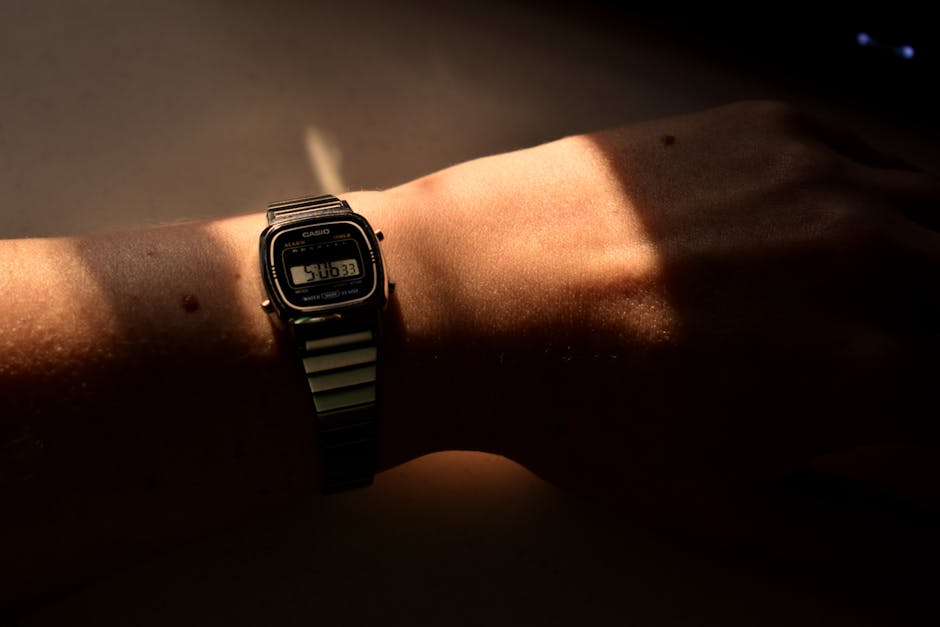
The Casio F-91W has been in continuous production since 1991. It runs a single CR2016 battery for approximately seven years, keeps time to ±15 seconds per month, and its resin case handles casual abuse that would damage more expensive options. It weighs 21 grams. It clears shirt cuffs. It looks exactly like what it is — a functional tool — and has developed a cultural footprint that makes it readable as a deliberate choice rather than a default.
Use this for: gym, travel, jobs involving physical work, any scenario where losing or breaking a watch would be a minor inconvenience rather than a real loss.
For Casual and Weekends: Timex Weekender ($35–$45)
The Timex Weekender runs a reliable quartz movement, uses a 20mm standard lug width compatible with hundreds of aftermarket straps, and costs little enough that buying two strap styles to shift the watch’s character entirely costs less than one fashion-brand watch. The Indiglo backlight — Timex’s electroluminescent dial illumination — covers the entire face rather than just an edge. The stock strap is adequate. A $12 leather replacement takes four minutes to swap and produces a noticeably different watch.
For Office and Smart Casual: Citizen BM8180 (~$100)
The Citizen BM8180 runs Citizen’s Eco-Drive movement, which converts ambient light — artificial or natural — into stored energy. No battery changes. Ever. The power reserve is six months of complete darkness, so it won’t die in a drawer through winter. Stainless steel case at 44mm, 100M water resistance, clean dial that reads appropriate in business casual without looking like a tool watch overreaching its brief.
This is the best daily-wear watch under $150. The combination of zero maintenance requirements, genuine water resistance, and proven quartz accuracy makes it the most practical watch to own at any budget in this range.
For Events and Dress Occasions: Orient Bambino ($100–$130)
The Orient Bambino is one of the only watches at this price with an in-house automatic movement. Orient is a Seiko subsidiary — same parent, distinct movement engineering. The domed mineral crystal catches light at angles that a flat crystal doesn’t, giving the dial visual depth that reads as considerably more expensive. Available in white Roman numeral, dark sunburst blue, and champagne dial configurations. Power reserve is 40 hours; it winds from wrist motion.
It will drift 10-15 seconds per day under normal use. That’s the mechanical trade. For events where someone might actually notice your watch, the Bambino earns its place. For precise daily timekeeping, quartz is still the right call.
For Active and Outdoor Use: Casio MRW-200H (~$25)
The Casio MRW-200H is the functional sibling of the F-91W with a 100M water resistance rating, an analog display, and a rotating bezel. It swims. It handles beach days, outdoor work, and mechanical hazards without concern. Resin case and strap won’t corrode. At $25, replacing it costs less than a restaurant meal.
The Mistake That Costs People the Most Money
Buying a fashion brand watch at this budget is the single mistake that sets most people back $80 to $120 with nothing durable to show for it.
Daniel Wellington and MVMT use commodity quartz movements — the same Miyota 2035 found in watches at a third of the price — inside cases engineered primarily for Instagram aesthetics. The bracelets use hollow links that dent under moderate pressure. The crystals are standard mineral glass, not treated or Hardlex. You’re paying for packaging, brand identity, and minimalist design language. If that’s the explicit goal, buy it with open eyes. If longevity and value drive the decision, the same money buys a Citizen or Seiko with substantially better build quality and a movement refined over decades.
Fashion watches also age poorly in a specific way. The aesthetic they’re selling is tied to a moment. Slim cases and minimal dials were everywhere from 2016 through 2026 and now read as dateable in a way that a Casio F-91W or a Seiko field watch simply doesn’t.
When the Budget Category Stops Making Sense
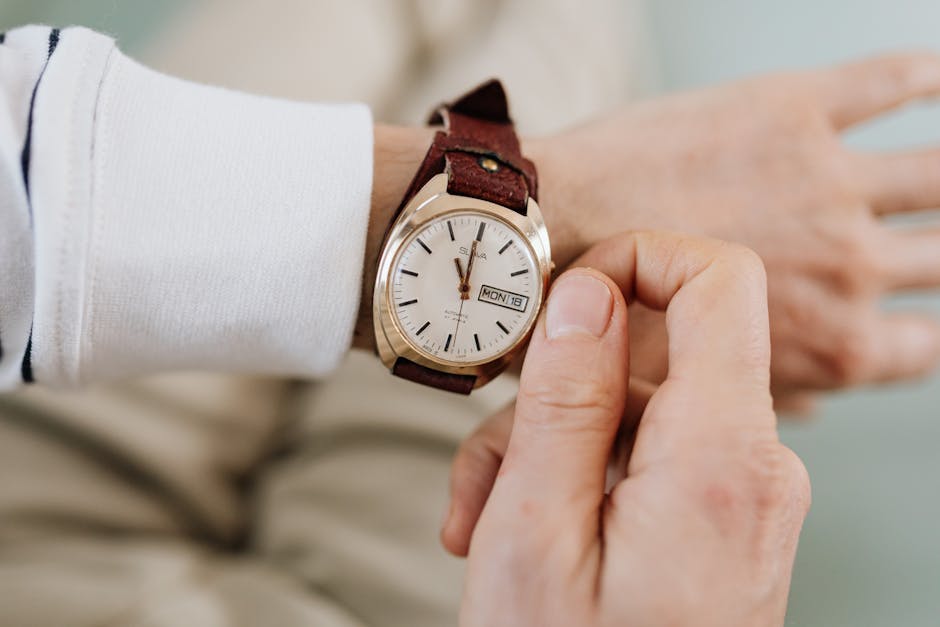
At $200 and above, the upgrade is real. The Seiko Presage line starts around $200 and delivers Japanese automatic movements with sapphire crystals and finishing that’s genuinely different from what this guide covers. The Hamilton Khaki Field Auto at around $350 uses a Swiss ETA movement in a watch with decades of heritage. The Tissot PRX at $375 is arguably the best integrated bracelet watch available below $500.
None of those belong in a budget conversation. But if someone is asking whether to spend $130 on a fashion brand or $175 on a Seiko Presage — the Seiko is the correct answer every time. The gap between a $130 fashion watch and a $175 entry-level Seiko is not $45. It’s a generation of manufacturing difference.
The budget category makes sense up to about $150. Past that, the mid-range starts, and the value calculus changes entirely.
The One to Buy
The Citizen BM8180 at around $100 is the right answer for most people asking this question.
No battery changes. Genuine 100M water resistance. Clean stainless case. The Eco-Drive movement has a documented track record of running twenty-plus years in daily conditions with no servicing required beyond keeping it exposed to light. Citizen backs it with a two-year manufacturer warranty.
If $100 is more than the situation calls for, the Timex Weekender with an aftermarket strap at $45 total handles everything a casual daily watch needs. And if the watch is going somewhere it might be damaged, lost, or left behind without a second thought, the Casio F-91W at $15 is correct with no reservation.
Three watches. Three price points. That combination covers everything the budget category actually demands.