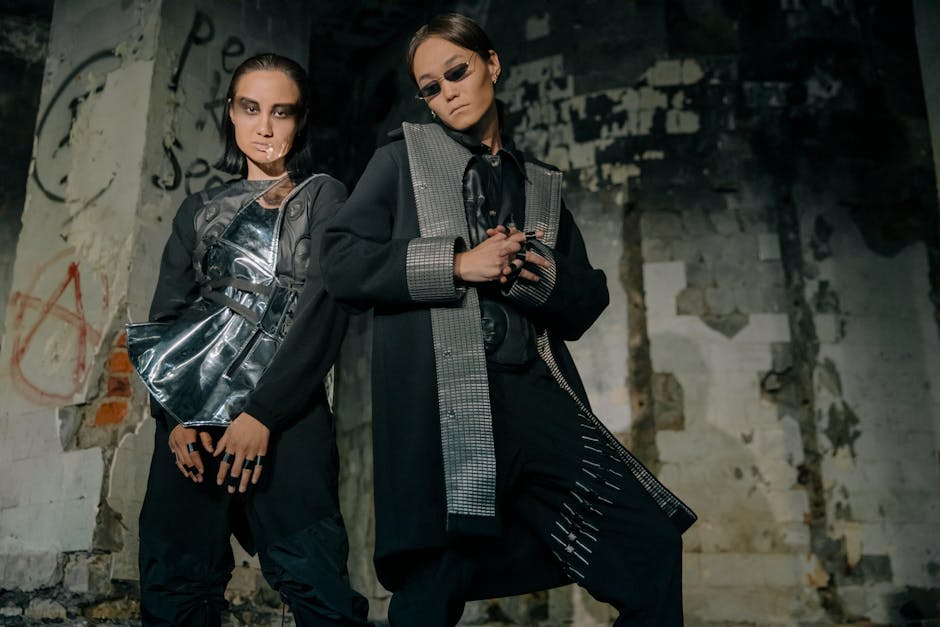
The split between decorative fashion books and actual reference material is real, and it matters more with Y2K than almost any other aesthetic. The era was chaotic, contradictory, and defined by roughly six subcultures running simultaneously — pop princess, hip-hop luxe, boho celebrity, European maximalism, velour tracksuit casual, and low-rise punk. A book that only shows runway shots tells you nothing about which of these you’re actually trying to recreate.
The books below are ranked by how much they teach, not how good they look on a shelf.
What Separates a Good Y2K Fashion Reference from a Filler Coffee Table Book
A useful fashion book shows context, not just clothing. That means: who wore it, what event it was for, what the cultural moment looked like, and what pieces defined the silhouette at a mass-market level — not just couture.
Y2K fashion specifically requires this context because the aesthetic reads wrong without it. Low-rise jeans paired with a butterfly clip reads 2002. Low-rise jeans with a Von Dutch trucker hat and rhinestone belt reads 2003. Those are different looks, even though the base garment is identical. Books that don’t anchor garments to a specific window within the era give you a blurred, generic version of Y2K that looks like a costume rather than a reference.
The other thing to check before buying: does the book cover ready-to-wear, or only haute couture? Y2K fashion was one of the first eras where celebrity street style and mass-market trends drove aesthetics more than the runway did. A book that only documents Galliano for Dior is technically accurate but practically useless if you’re trying to understand what people were actually wearing at a 2003 mall.
Three questions to ask before buying any fashion book
- Does it include photography from real-world wear, not just runway or editorial?
- Does it cover the specific sub-era you want — late 90s versus early 2000s read completely differently?
- Does it name the designers, brands, and price points that drove the trend at a consumer level?
If a book passes all three, it’s a reference. If it passes one or two, it’s inspiration. Both have value — but know which you’re buying before you spend money on it.
The Y2K Fashion Books Worth Adding to Your Shelf

These are all real, currently available books — in print or easily sourced used. Prices reflect approximate used-market availability.
| Book | Author(s) | Published | Best For | Approx. Price (Used) | Y2K Coverage Depth |
|---|---|---|---|---|---|
| Juicy: The Delicious History of the Booty-Shaking, Pant-Dropping, Queen-Making Label That Defined an Era | Pamela Skaist-Levy & Gela Nash-Taylor | 2010 | Velour tracksuit culture, celebrity casual Y2K | ~$12–18 | Deep and era-specific |
| Style A to Zoe | Rachel Zoe with Rose Apodaca | 2007 | Celebrity red carpet and boho Y2K styling formulas | ~$6–10 | Very specific to 2003–2007 |
| House of Versace: The Untold Story of Genius, Murder, and Survival | Deborah Ball | 2010 | Maximalist Y2K, Donatella’s design decade | ~$10–15 | Strong 2000–2007 focus |
| The Fashion Book | Phaidon Press | 1998 (revised 2014) | Designer-level Y2K context, encyclopedia format | ~$35–45 new | Moderate — spans all eras |
| Vogue: The Covers | Dodie Kazanjian | 2011 | Visual trend documentation by year, 1999–2005 covers | ~$20–30 | Good visual archive |
The Juicy Couture book is the single best Y2K reference for everyday styling. Skaist-Levy and Nash-Taylor document not just the garments but the cultural ecosystem around them — which celebrities wore what, in which context, and why that mattered to the mainstream consumer. For understanding how Y2K spread from celebrity to high street, this is the primary text. Style A to Zoe runs a close second for anyone focusing on the boho-celebrity lane of the aesthetic.
How to Use a Fashion Book as a Working Style Reference
Most people flip through fashion books once, put them on a shelf, and call it inspiration. That’s not how you extract actual styling knowledge. Here’s a more useful process.
- Read the introduction and editor’s note first, even if they’re dry. These sections explain the book’s editorial lens. Some Y2K books are deliberately nostalgic and emphasize things that felt exciting in retrospect rather than what was actually pervasive at the time. Knowing the lens helps you read the imagery correctly.
- Tab sections by garment category, not aesthetic category. Use Post-it flags for: trousers and skirts (silhouette), outerwear (proportion), footwear (heel height and toe shape), accessories (scale and placement). Y2K gets applied wrong most often because people borrow the aesthetic label without getting the proportion and silhouette right.
- Look at the shoes in every photograph, not just the outfit. Y2K footwear is the most reliable dating signal in the aesthetic. Chunky platform mules, kitten heels on pointed-toe pumps, flip-flops with formal wear, and low block-heeled boots all correspond to different years within the era. Get the shoes right and the rest of the outfit locks in.
- Compare three images from the same year before drawing conclusions. A single editorial shot from 2002 can mislead you. Compare three images from different contexts — red carpet, street style, retail catalog — from the same 12-month window to triangulate what was widespread versus what was a one-off editorial moment.
- Note fabric and finish in every piece you’re drawn to. Y2K heavily favored specific finishes: velour, mesh, patent leather, metallic, glossy vinyl, stretch satin. The silhouette alone won’t get you there. Rachel Zoe’s Style A to Zoe is particularly useful here — she names fabrics and finishes in ways most fashion books skip entirely.
When written annotation beats an inspiration board
If you’re using a fashion book to build an actual wardrobe rather than a mood, write directly in the margins or on sticky notes. Specific notes are more actionable than any saved image: “2001, cargo pants — wide leg, sit at hip not waist, hem at ankle, worn with chunky platform sandal.” That’s a shopping brief. A saved image is just visual noise.
The Visual Codes Every Y2K Book Documents — and Why They’re Easy to Get Wrong

Y2K fashion had a set of recurring visual codes that appear across every serious reference book. The problem is that these codes interact with each other in specific ways, and applying them incorrectly produces results that read as costume rather than style.
The first code is logo saturation. Brands like Dior, Louis Vuitton, and Fendi made their monogram fabric the entire outfit, not an accent. The Galliano-era Dior saddle bag, the LV monogram canvas, the Fendi baguette — these weren’t accessory pieces, they were the central statement. Current Y2K revival styling often gets this wrong by treating logos as accents on otherwise neutral outfits. That’s not Y2K. That’s contemporary minimalism with a logo bag. The original aesthetic was deliberate, full-commitment maximalism.
The second code is exposed midriff with specific proportions. The crop was usually no more than three to four inches of skin — not the extreme crops common in 2026s revival styling. The low-rise sat approximately two to three inches below the natural waist, not at the hip bone. Small differences, but they determine whether the silhouette reads correct or just reads as low-rise.
The third code is color at high saturation. Y2K borrowed from 1980s neon but filtered it through bubblegum pink, electric blue, lime green, and hot orange. Pastel Y2K is a contemporary reinterpretation, not an authentic reference. House of Versace by Deborah Ball documents this well — Donatella’s output from 2000 to 2006 is essentially a master class in how saturated color functioned within the era’s maximalist framework. Roberto Cavalli’s animal prints from the same period operate on the same logic: the intensity was the point.
The fourth code is deliberate texture contrast. Velour next to denim. Patent leather next to jersey knit. Mesh over matte cotton. The era actively mixed finishes in ways that looked almost random but were in practice very controlled. The Fashion Book by Phaidon Press, despite spanning all fashion eras, handles this well — because the book categorizes by designer technique rather than trend, which forces more specific observation about fabric choices.
Two codes that most people overlook: rhinestone placement (Y2K rhinestones appeared on hems, belt loops, and collar edges — not scattered across the body of a garment), and shoe-to-trouser proportion (wide-leg trousers required platform shoes to maintain the right visual weight; slim trousers required pointed kitten heels or flip-flops specifically).
The late 90s versus early 2000s split most books blur
1997 to 2000 had a distinct character from 2001 to 2005. The late 90s wave was dominated by slip dresses, spaghetti straps, minimalist satin — driven by Helmut Lang and Calvin Klein’s output. By 2001, that minimalism had inverted into maximalism: Cavalli animal prints, Von Dutch logo wear, rhinestone embellishment, Juicy Couture’s velour tracksuits. Books that cover both periods under a single “Y2K” label aren’t wrong, but they’ll give you a composite aesthetic that doesn’t actually read as either era.
Where Y2K Fashion Books Get It Wrong
Do recent Y2K books over-romanticize the era?
Yes, frequently. Books published in the 2026s as Y2K experienced its revival tend to curate the era’s most visually striking moments — the Galliano runway shots, the Versace red carpet looks, the iconic Destiny’s Child coordinated outfits. These existed, but they represent the ceiling of the aesthetic, not its floor. Most people in 2002 were wearing low-rise flared jeans from BCBG Max Azria, a fitted ribbed tank, and platform sandals. That’s Y2K too, and it’s more useful as a reference for modern dressing than a Cavalli couture piece that cost $8,000 in 2001.
Is the Phaidon Fashion Book worth the price for Y2K specifically?
Only if you want designer-level context across the broader era. At $40 to $75 depending on the edition, The Fashion Book is an investment that pays off if you’re researching the aesthetic broadly. For Y2K specifically, it works better as a supplement to more era-specific books rather than a primary reference. The alphabetical format by designer means Y2K context is scattered throughout rather than consolidated — useful for deep dives on specific designers, less useful for building a coherent picture of a single year.
Are there Y2K books that are actively misleading?
Some books published as “2000s nostalgia” in the past five years are thin on documentation — heavy on aesthetic photography, light on editorial context or designer attribution. The red flag: no image captions that include the year, designer, and occasion. If every photo in a fashion book is uncaptioned, you can’t actually learn anything useful about when or why a look existed. Skip those regardless of how well the cover photographs.
The Fastest Path from Page to Wardrobe

Pick one sub-era and one sub-culture, then build around it exclusively. Not “Y2K generally” — that’s too wide to shop from. “Early 2000s celebrity boho, 2003 to 2005, Rachel Zoe’s client styling” is specific enough to produce an actual shopping list. Use Style A to Zoe as your primary reference. Note the five pieces Zoe documents repeatedly — the wide-leg trouser, the wedge sandal, the oversized tinted sunglasses, the chain belt, the layered tank — and build outward from those five elements.
That’s how fashion stylists actually use books. Not as mood boards. As evidence-based shopping briefs.