
Many people starting a closet organization project hit a wall almost immediately. They believe the first step must be to rip everything out, dump it on the bed, and then try to sort through a mountain of clothes. This approach often leads to overwhelming frustration, leaving you with a bigger mess than you started with. A more effective, less intimidating strategy exists, one that focuses on practical steps rather than immediate chaos.
Debunking the “Declutter First” Myth
The idea that you must clear out every single item before you can even begin to organize is a common misconception. It’s an approach that frequently paralyzes individuals, preventing them from starting at all. Instead of an all-or-nothing purge, consider a phased strategy. You don’t need to empty your entire closet onto the floor. This method often creates decision fatigue before any real progress is made. Many get halfway through, feel exhausted, and then shove everything back in, worse than before. A better way involves systematically assessing your items in manageable batches.
The “Sort and Contain” Approach
Start by tackling one small section of your closet at a time. Maybe it’s just your shirts, or just your pants. Pull out only those items. This allows you to focus on a limited inventory, making decisions easier and less stressful. As you sort, have a designated space for items you’re keeping, items for repair, and items for removal. The goal here isn’t to get rid of everything; it’s to categorize what you own and identify immediate redundancies or obvious discards. You might find you own seven identical black t-shirts. Keeping two or three of the best ones becomes an easy decision, rather than agonizing over a pile of 50 miscellaneous garments.
Setting Up a Donation Zone
Before you even begin sorting, establish a temporary holding area for items leaving your closet. This could be a large laundry basket, a reusable shopping bag, or a dedicated box near your closet door. Label it clearly: “Donate/Sell.” As you work through a section of your wardrobe, any item you decide to part with goes straight into this zone. This prevents items from migrating back into the closet or lingering in limbo on a chair. Once the bag or box is full, commit to getting it out of your house within 48 hours. Many charity shops offer convenient drop-off times, or you can schedule a pickup with organizations like the Salvation Army or Goodwill. The physical act of removing these items provides immediate visual and mental relief, fueling motivation to continue with the next section.
Essential Tools for Closet Organization

The right tools don’t just hold your clothes; they define your space, protect your garments, and streamline your routine. Investing in smart, durable solutions pays off by simplifying retrieval and maximizing storage capacity. You don’t need to spend a fortune, but strategic purchases can make a huge difference in how functional your closet becomes.
-
Slimline Hangers: Upgrade all your mismatched hangers to a uniform, slim design. Velvet-flocked hangers, like the Velvet Slimline Hangers (20-pack for $15-20) from brands like Amazon Basics or Mainstays, prevent clothes from slipping and significantly reduce the visual clutter of varying hanger styles. Their thin profile also frees up several inches of rod space, allowing you to fit more garments without crushing them. Avoid cheap plastic hangers that sag or break easily.
-
Drawer Dividers: For dresser drawers or built-in closet drawers, dividers are non-negotiable. They keep folded items neat and prevent chaos. Consider bamboo drawer dividers, such as those from Container Store (starting around $12 per divider), or adjustable plastic options. They create compartments for socks, underwear, activewear, or even T-shirts, ensuring that when you pull out one item, the rest stay perfectly in place. This small detail saves minutes every morning and maintains order effortlessly.
-
Clear Storage Bins: For items stored on shelves or in overhead spaces, clear bins allow you to see contents at a glance. Brands like Sterilite (various sizes, $5-15 each) offer durable, stackable options. Use them for sweaters, accessories, or out-of-season items. Knowing exactly what’s inside prevents you from rummaging through opaque boxes and making a mess searching for one specific item. Labeling is a bonus, but clear bins reduce the necessity.
-
Command Hooks: These versatile adhesive hooks from 3M Command (various sizes, $5-15 per pack) are incredibly useful for adding storage without drilling. Use them on the inside of closet doors for belts, scarves, necklaces, or even small bags. They are easy to install, remove cleanly, and provide immediate, accessible storage for items that often get tangled or lost in drawers. Choose hooks rated for the weight of the items you plan to hang.
-
Shelf Dividers: If your shelves are deep and prone to becoming a messy pile of sweaters or denim, shelf dividers are a . These clear acrylic or wire units, available from retailers like Target (starting at $8-10 each), stand upright on your shelf to create individual sections. They keep stacks of clothing upright and tidy, preventing them from toppling over and mixing with other categories. This simple addition elevates the functionality of any open shelving.
The Wardrobe Audit: Categorizing Your Clothes
Before any item finds its permanent home, you need to understand exactly what you own. This isn’t about throwing things out; it’s about grouping similar items and assessing their condition. This systematic review ensures every piece in your closet genuinely serves a purpose, whether practical or sentimental. This process is less about minimalism and more about intentionality.
The Keep, Repair, Donate, Discard Method
Perform this audit category by category. Gather all your jeans, then all your dresses, then all your sweaters. For each item, make a quick, honest decision. Ask yourself:
- Keep: Do I love it? Does it fit well? Have I worn it in the last year? Is it in good condition? If yes, it stays. This forms the core of your active wardrobe.
- Repair: Does it need a button, a hem, or a minor fix? If you genuinely plan to repair it, place it in a dedicated “Repair” pile. Set a deadline for repairs (e.g., two weeks). If it’s not fixed by then, it moves to “Donate/Discard.” Don’t let the repair pile become a permanent storage solution for unwearable items.
- Donate/Sell: Is it in good condition but no longer suits your style, doesn’t fit, or simply isn’t worn? Someone else could love it. Place these items in your predetermined “Donation Zone.”
- Discard: Is it stained, torn beyond repair, faded, or otherwise unwearable? These items have reached the end of their life cycle. Dispose of them responsibly.
By categorizing first, you avoid mixing up decision types. You’re not deciding where something lives while also deciding if it’s worth keeping. This streamlines the entire process, making each decision quicker and less emotionally draining.
Maximizing Vertical Space with Smart Storage

The biggest mistake most people make in closet organization is underutilizing vertical space. Floors become cluttered, and shelves remain half-empty. Your closet’s height is a valuable asset, often neglected. The key to an efficient closet is thinking vertically, installing systems that reach from floor to ceiling, and ensuring every inch serves a purpose.
You should prioritize a modular shelving and rod system over fixed, basic rods and a single shelf. Fixed systems limit flexibility and often leave large gaps of unusable space. Modular systems, like those offered by Elfa (available at Container Store, individual components starting around $20-30) or IKEA PAX (complete units from $200-800 depending on size and features), allow you to customize rod heights, add drawers, shelves, and baskets, adapting to your specific wardrobe needs. This approach lets you store more items in a more accessible way, from long dresses to stacked sweaters.
Understanding Modular Systems
Modular systems are built from individual components – uprights, shelves, drawers, rods – that can be reconfigured. This means if your needs change (e.g., you get more pants and fewer dresses), you can adjust your closet setup without a complete overhaul. Elfa, for example, uses a top track and hanging standards, allowing shelves and drawers to be clicked into place at any height. The IKEA PAX system uses frames with internal fittings that slide in and out. While the initial investment might be higher than basic wire shelving, the flexibility and durability make them cost-effective in the long run. They are designed to fit various closet widths and depths, maximizing every available dimension.
Utilizing Wall Space
Don’t overlook the back and side walls of your closet that aren’t occupied by rods. These areas are perfect for shallow storage. Consider installing simple floating shelves for shoes or small bins. Pegboards, like the IKEA SKÅDIS series (panels starting around $17), can be mounted on walls and fitted with hooks, containers, and clips for accessories, jewelry, or even small purses. This keeps often-used items visible and easy to grab, preventing them from cluttering up drawers or shelves. Even a simple over-the-door shoe organizer can add significant storage for footwear, scarves, or other small items, putting previously wasted space to work.
Hanger Types Compared: A Practical Breakdown
Choosing the correct hangers is more than just an aesthetic decision; it directly impacts garment care and overall closet capacity. The type of hanger dictates how well your clothes are preserved and how much space they consume. Here’s a quick comparison of common hanger types:
| Hanger Type | Pros | Cons | Best Use |
|---|---|---|---|
| Velvet Slimline | Space-saving, non-slip, gentle on fabric | Can be slower to hang/remove, not ideal for wet items | Blouses, dresses, delicate fabrics, pants |
| Wooden | Durable, good for heavy garments, maintains garment shape | Bulky, expensive, takes up significant rod space | Suits, jackets, coats, tailored items |
| Plastic (basic) | Inexpensive, lightweight | Break easily, slippery, often bulky, not eco-friendly | Lightweight shirts (as a temporary solution), children’s clothes |
| Padded | Prevents shoulder bumps, gentle on delicate fabrics | Bulky, expensive | Sweaters, formal wear, silk blouses |
Choosing the Right Hanger for Garment Longevity
The best choice for most general wardrobe items is the velvet slimline hanger. Its non-slip surface prevents blouses and dresses from sliding off, and its thin profile allows for more clothes per linear foot of rod space. For heavier items like suits, blazers, and coats, investing in sturdy wooden hangers with a proper shoulder curve is crucial. These prevent stretching and maintain the garment’s original shape. Avoid wire hangers from dry cleaners; they distort shoulders and crease clothing. Over time, the uniform appearance of consistent hangers also contributes to a calmer, more organized visual in your closet.
Maintaining Your Organized System
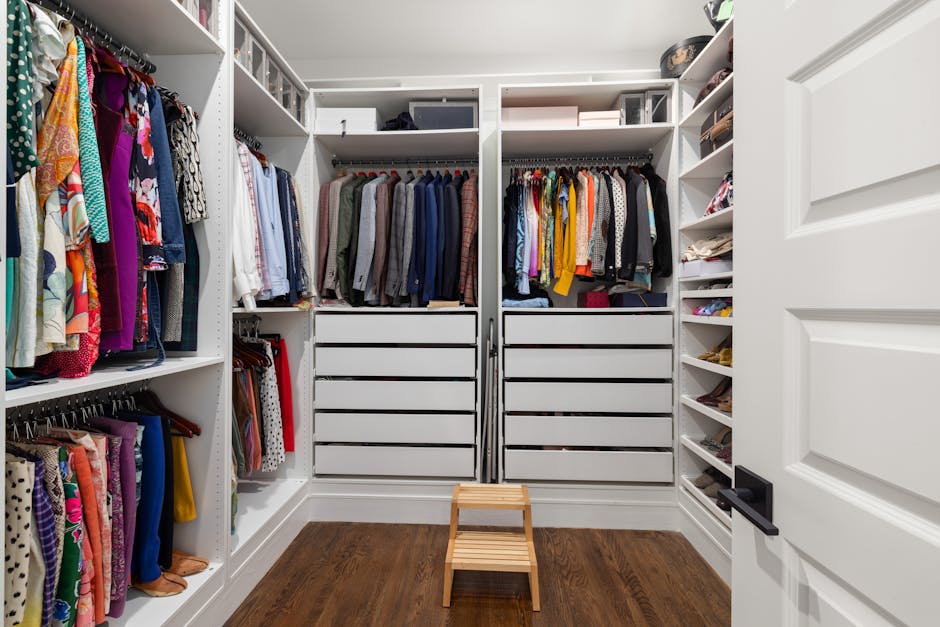
An organized closet isn’t a one-time project; it’s an ongoing practice. The initial setup is significant, but true success lies in integrating small habits that keep the system running smoothly. Neglecting maintenance means you’ll be back to square one sooner than you think.
How Often Should I Re-evaluate?
A full wardrobe audit isn’t needed monthly, but a quick re-evaluation every three to six months is highly effective. This doesn’t mean pulling everything out again. Instead, take 15-30 minutes to scan your closet. Look for items that have snuck back into the “keep” section but haven’t been worn. Check for new clutter. Are any categories overflowing? Use this time to address minor issues before they become major problems. A seasonal change is an excellent natural trigger for this quick check-in, as you’re already rotating some items.
What to Do with Out-of-Season Items?
Storing out-of-season clothing correctly prevents unnecessary clutter in your active closet and protects garments. For bulky winter sweaters or light summer dresses, vacuum-seal bags or breathable fabric storage bins are excellent solutions. IKEA SKUBB storage cases (various sizes, $7-20 each) are a popular option for under-bed or top-shelf storage. Before packing, ensure clothes are clean; otherwise, stains can set in, and pests might be attracted. Store these bins in a cool, dry place – a high shelf in the closet, under the bed, or in a spare room. Rotating your wardrobe seasonally makes finding clothes easier and keeps your primary closet from feeling overcrowded year-round.
One Immediate Step for Overwhelmed Closets
If your closet feels utterly chaotic and you’re unsure where to even begin, start with a single category that causes you the most frustration. Maybe it’s your overflowing sock drawer, or the pile of T-shirts that never stay folded. Pick that one area, pull everything out, and only put back what you actually use and love, neatly folded or contained. This small victory provides instant relief and the momentum you need to tackle the next section.