A SMALL-BAG DAY / FROM 9:00 TO LATE
Give Every Small Item a Job Before It Enters the Bag
A small woven bag can carry a whole day when the day is planned honestly. The point is not to squeeze a large-bag life into miniature dimensions. It is to decide what must stay with you, what can remain at the hotel and what can be used up along the way.
BEFORE THE DOOR CLOSES
Start with the day’s fixed points
Lay out only the moments that cannot move: a market opening, a museum ticket, a lunch reservation, the time you need to change for dinner. Everything else is flexible. These fixed points tell you whether the bag needs to support walking, queuing, public transport or an evening table. They also reveal whether you will return to your room. A midday return makes a bag swap possible; a continuous day asks one bag to bridge every setting.
Write down the objects each fixed point requires. A ticket may live on the phone, but the phone then needs enough battery. A restaurant may require reading glasses. A market may work better with a fold-flat shopping tote. Keep the list attached to actions, not vague fears. “Card for lunch” is useful; “anything I might need” is how a small bag becomes unusable.
Choose three true non-negotiables beyond phone, cards and keys. They might be medication, sunglasses and a compact sunscreen. If a fourth item enters, name what leaves. This exchange rule protects the bag from quiet accumulation and makes every addition visible.
THE FIRST WALK
Choose the carrying mode before the colour
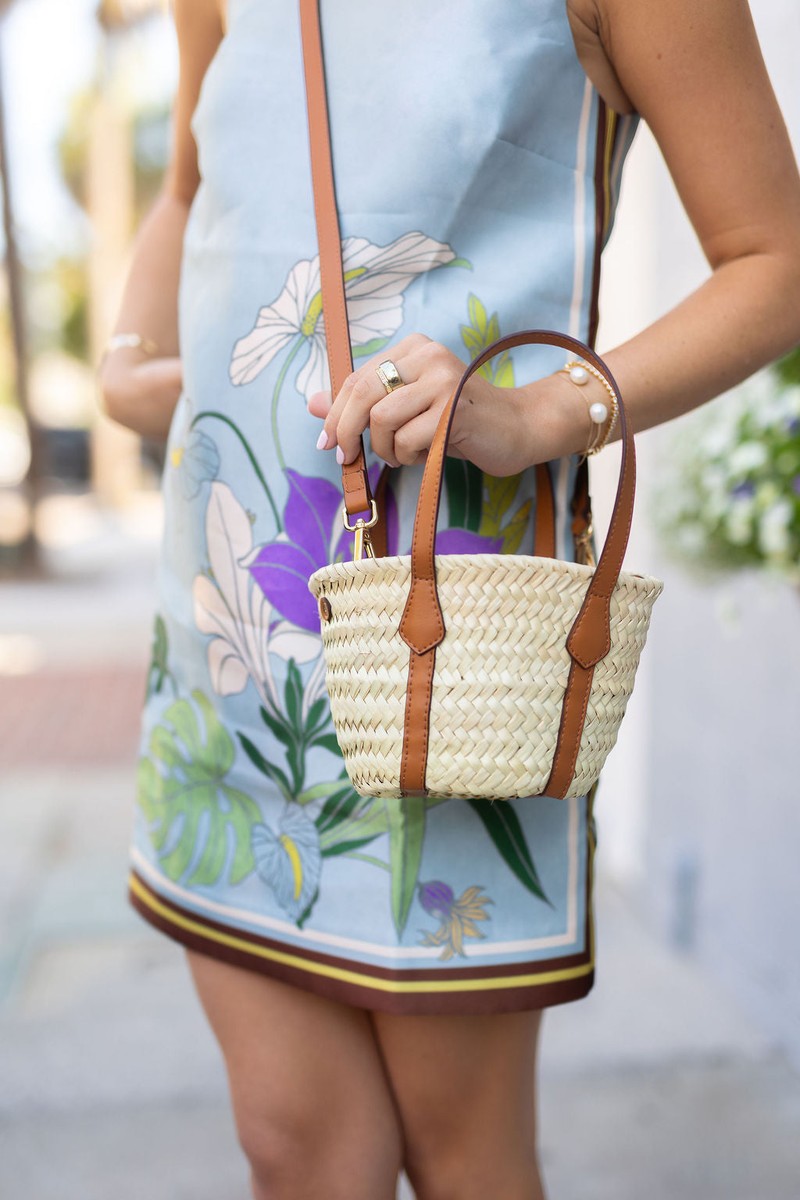
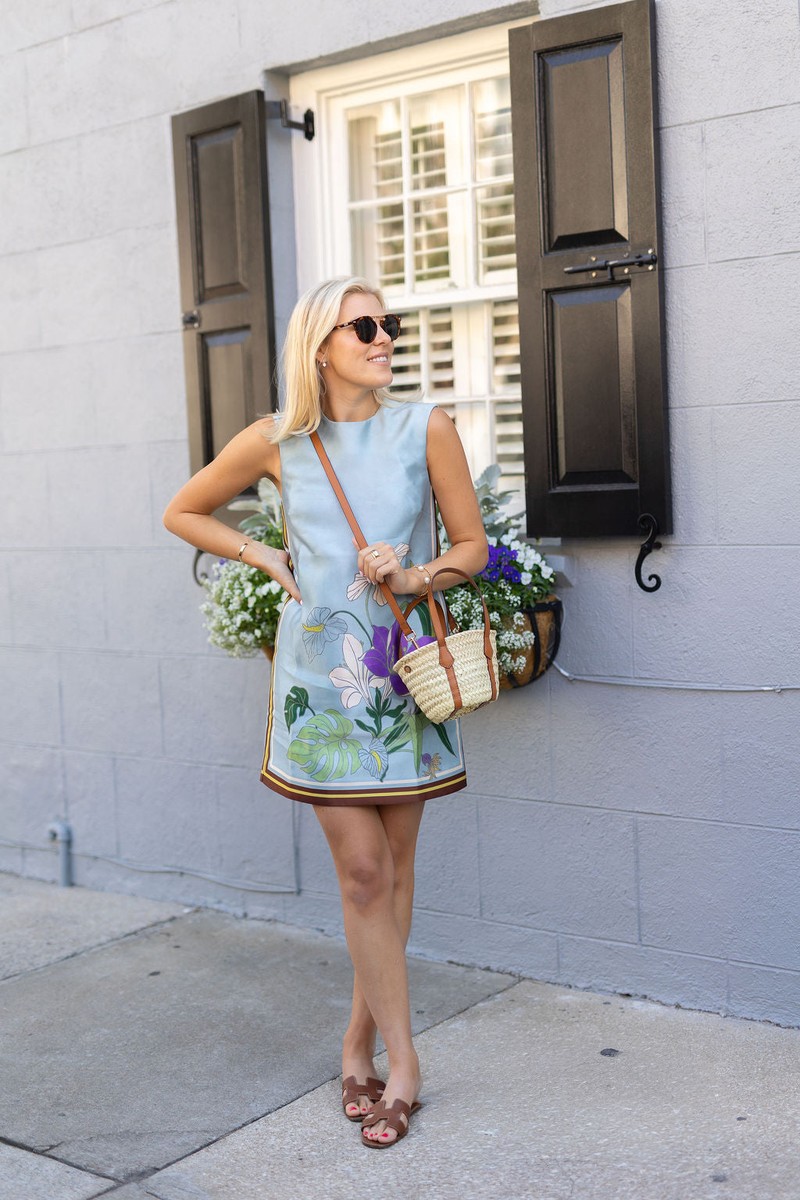
A handheld mini tote gives an outfit a deliberate finish, but it occupies one hand. A crossbody strap frees both hands for coffee, directions and market browsing. The Abby Mini Tote is shown by the merchant as a convertible format, which makes the carrying decision part of the day rather than a permanent choice. Use that flexibility with intention: strap on while moving, handles in hand when you want a cleaner arrival.
Adjust a strap at home, wearing the layer you will actually use. The bag should rest where your hand can cover its opening naturally, not bounce against the thigh or sit directly under the arm. A strap that seems correct over a thin top may become short over a cardigan. If the day involves many layers, choose the setting that works for the bulkiest one.
Do not let a detachable strap become loose cargo. If you remove it for dinner, roll it gently and place it around the perimeter of the bag or leave it safely at the hotel. Stuffing a rigid strap across the top wastes the easiest access space and can press against sunglasses or cosmetics.
MARKET HOUR
Keep payment and keys on separate paths
The most frustrating small-bag tangle is usually not caused by too many items. It is caused by items crossing. Keys scratch a phone, a long receipt wraps around a lipstick, and a card case sinks beneath a glasses cloth. Give the three high-use objects fixed positions. Put the phone against the broadest flat side, the card case in the same corner every time and keys inside a tiny soft pouch or attached clip if the bag provides one.
Use a card case rather than transferring loose cards into a pocket. The case makes the payment object easy to recognise by touch and keeps the return ritual simple. Carry only the cards needed for the day, plus identification appropriate to the plans. Receipts go into the case or a single fold, not loose at the bottom.
A fold-flat shopping bag is the one expansion item worth considering at a market. It should be truly flat and used for purchases, not carried half full from breakfast. This keeps the woven bag light and prevents food, flowers or packaging from pressing against personal items.
LUNCH RESET
Remove what has already done its job
A small bag should become lighter as the day advances. Discard used tissues and wrappers, move a completed ticket out of the active area and consolidate receipts. If you carried a single-use sunscreen sample, finish or dispose of it properly rather than preserving an empty packet. The lunch table is a good reset point because the bag can stay open on your lap while every object remains visible.
Keep the bag away from food and moisture. A woven surface gains its character from texture, and that texture can hold crumbs or absorb a spill more stubbornly than a smooth surface. Place the bag on your lap or a clean spare chair when appropriate, never on a table where it crowds plates. Do not hang a loaded bag from a delicate handle if the weight pulls it out of shape.
Check the evening plan before closing the bag. If you will return to the room, identify what can be left behind and what must be added. If you will continue directly to dinner, protect one small refresh item now rather than bringing a full cosmetics case.
THE WARMEST HOUR
Build a refresh kit around one decision
A day-to-dinner bag does not need duplicate makeup. Decide what makes you feel finished: perhaps lip colour, blotting papers or a compact comb. Choose one lead item and one supporting item. A lipstick and a small mirror make sense together. A comb and hair tie make sense together. Five unrelated miniatures create clutter without producing a coherent reset.
Sunscreen deserves a separate decision because it is functional. Choose a compact format that closes securely and suits the way you reapply. Keep it inside a tiny washable sleeve so it cannot mark a phone or woven lining. Never transfer a product into an unlabelled container if doing so makes the contents or safe use unclear.
Carry a thin glasses cloth even if you do not wear glasses. It can clean sunglasses and a phone screen without adding bulk. Fold it around the most delicate flat object so it earns its space twice. Small-bag packing improves when every soft item also protects something.
DINNER CHANGEOVER
Convert the bag without performing a full unpack
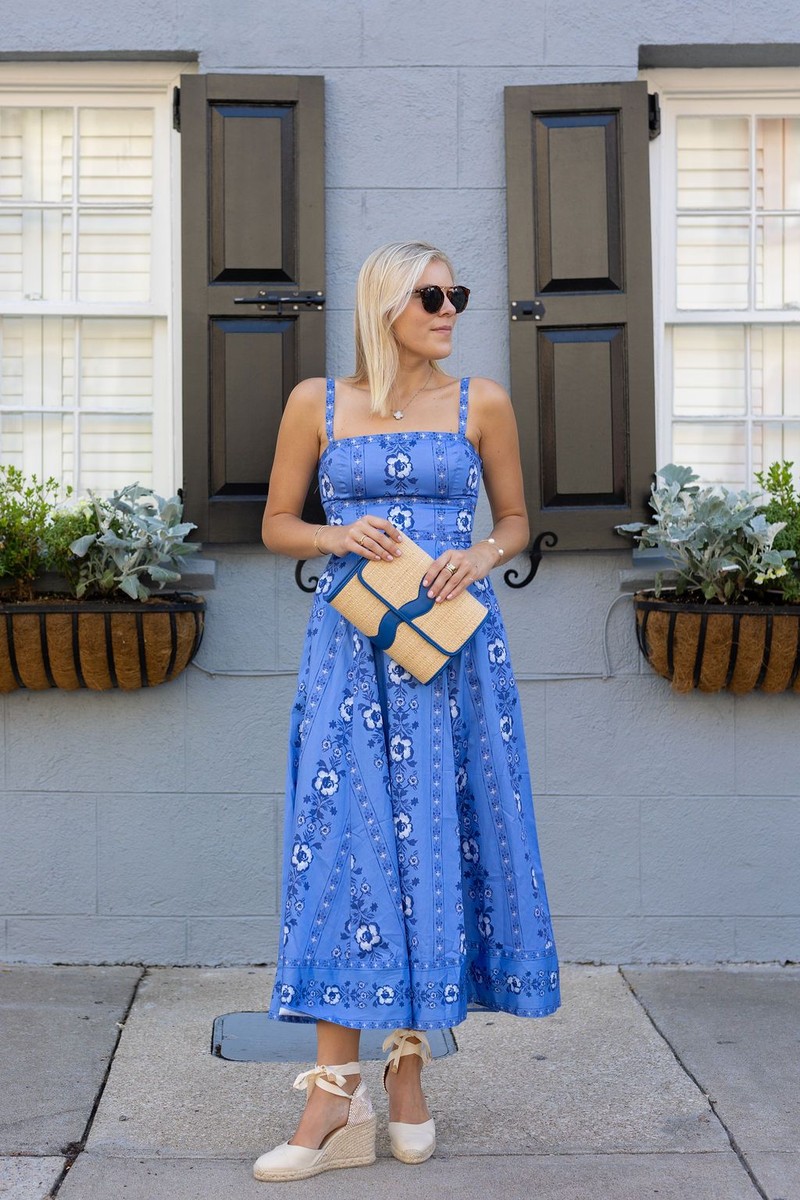
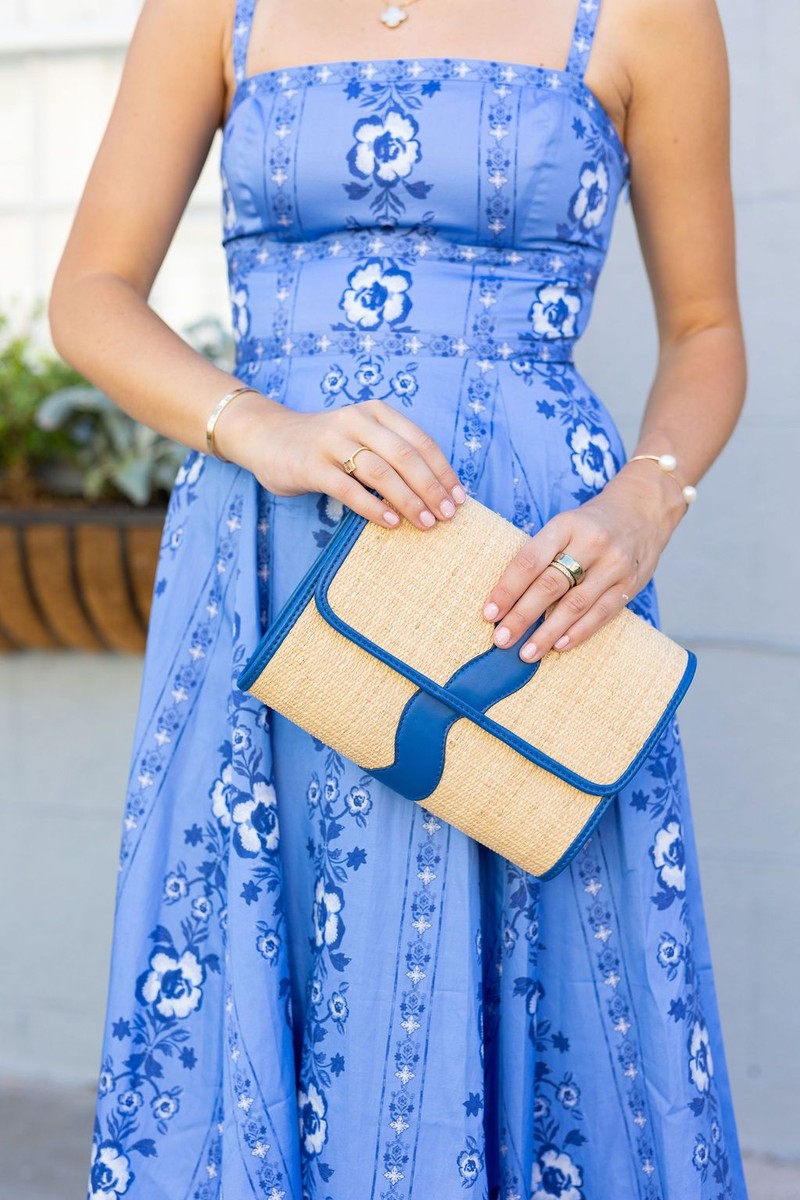
The fastest evening change is a change in carrying mode. A hidden or detachable strap can move out of sight, turning a hands-free daytime bag into a cleaner handheld shape. The Allie Rattan Clutch illustrates this kind of day-to-evening logic. The useful feature is not that a bag becomes formal by magic; it is that the carrying hardware does not dominate the evening silhouette.
Before tucking away a strap, take out the phone and card case. This prevents them from being trapped under the rolled strap and lets you rebuild the interior in one pass. Place flat objects against the back, keys low in a protected corner and the refresh pair at the top. Close the bag and hold it as you will at dinner. If the shape bulges, remove one item rather than rearranging the same problem.
A small woven bag works well with simple clothing because texture supplies interest. You do not need to add several matching accessories. Let the bag be one point of detail and keep jewellery, shoes or belt quieter. This restraint makes the day outfit feel intentionally adjusted rather than changed into a costume.
AT THE TABLE
Make access discreet and predictable
At dinner, the phone should not be the object that holds the bag open. Put it away fully and use the same pocket or flat side every time. When you need a card, the case should come out without the keys following it. Predictable placement is what makes a small bag feel calm in a crowded setting.
Keep the bag close without placing it where servers or other guests must navigate around it. A compact clutch can rest on your lap for short periods or on a clean chair beside you when space allows. Avoid the floor, especially near foot traffic. If the bag has a strap, do not loop it around furniture in a way that creates a trip hazard or makes a quick departure awkward.
Resist collecting paper at the end of the meal. Put the receipt in the card case, not into the main compartment. Return the card immediately. This small closing ritual prevents the familiar search at the next stop and makes it clear that the transaction is complete.
THE ROOM RESET
Empty the bag while the day is still easy to remember
When you return, place the bag on a clean, dry surface and remove everything. Return cards and keys to their usual places, charge the phone and discard what is finished. If the bag met rain, humidity or a spill, follow the current product care guidance and allow it to dry away from direct heat. Do not leave damp cloths or cosmetic sleeves inside overnight.
Notice which object never left the bag. It may still have been sensible insurance, but repeated non-use is useful evidence. After several days, the untouched items reveal where habit rather than the itinerary is driving your packing. Remove one on the next outing and see whether the day feels different.
The success of a small bag is not measured by how little you carried. It is measured by whether you could find what mattered, move comfortably and arrive at dinner without feeling that your belongings controlled the plan. A clear route and fixed positions do more than extra capacity.
CHOOSE FOR THE ROUTE
Small capacity works when the plan is specific
Compare Breck & Grier’s current mini tote and clutch formats against your own day. Check dimensions, strap details, materials and care instructions on the merchant page, then choose the carrying mode that fits the longest stretch between room resets.