Most women overthink interview outfits in one specific way: they focus on what looks good to them instead of what reads credible to a stranger making a snap judgment in 45 seconds. That is the real problem. And it is fixable.
This guide is built around what hiring managers and recruiters actually notice — and what sends candidates home without an offer before they have answered a single question.
Dress Code by Industry: A Straight Comparison
The biggest mistake is applying one standard to every interview. A full suit at a tech startup reads as out-of-touch. A casual blazer at a law firm reads as unprepared. Industry matters.
| Industry | Dress Code | What Works | What to Avoid |
|---|---|---|---|
| Finance / Law / Consulting | Business Formal | Tailored suit in navy or charcoal, structured dress with blazer | Mismatched separates, casual flats, open-toe shoes |
| Marketing / PR / Advertising | Business Casual | Polished blazer and trousers, midi dress in solid or subtle print | Full matching suit (overdressed), overly trendy pieces |
| Tech / Startups | Smart Casual | Clean separates, well-fitted trousers, minimal accessories | Full suit — signals you do not understand the culture |
| Healthcare / Non-profit | Business Casual | Neat blouse and tailored trousers or A-line skirt | Flashy jewelry, strong perfume, very bright colors |
| Government / Education | Conservative Business | Conservative suit, structured dress, classic pumps | Bold prints, fashion-forward silhouettes |
Research the company before you decide. Look at LinkedIn photos of people who already work there. If everyone is in hoodies, a blazer is your middle ground. If everyone is in suits, match them.
What business casual actually means right now
Business casual has shifted. Most offices post-pandemic landed somewhere between polished and relaxed. For interviews, lean toward the polished end. Clean trousers, a structured blouse, and a blazer you can remove. That is the working definition.
It does not mean jeans and a nice top. Not for an interview. Not even at a startup.
When the full suit is non-negotiable
Finance, law, management consulting — wear the suit. These industries still read formal dress as a signal that you take the role seriously. Show up in business casual and you have already started behind. The Ann Taylor Ponte Blazer Suit (~$180 for the set) is a reliable pick: structured, wrinkle-resistant, and sharp in navy or black.
The One Outfit Formula That Works Nearly Everywhere
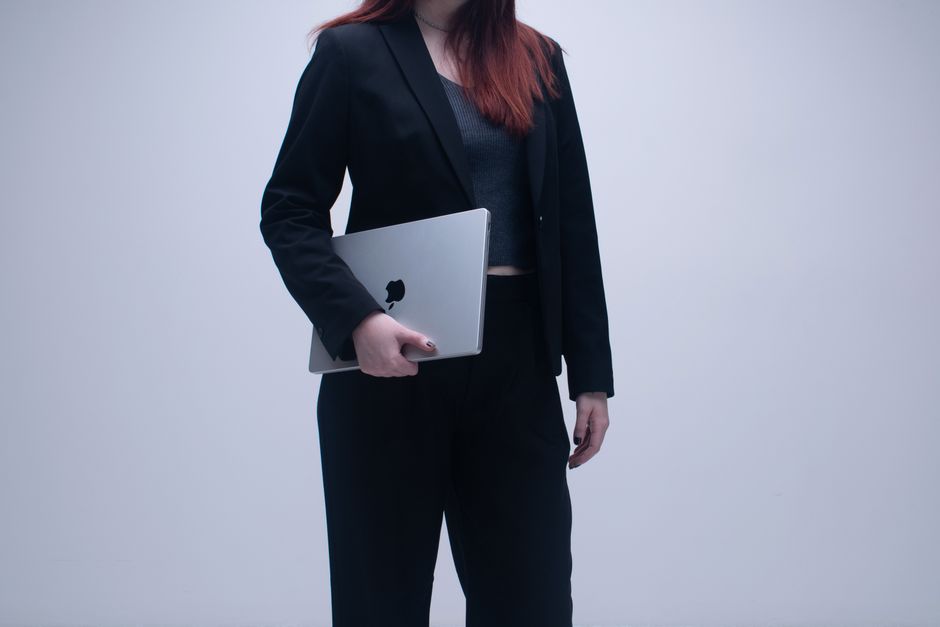
Tailored navy or charcoal blazer. Well-fitted straight-leg trousers in the same or complementary tone. A clean, tucked blouse — no logos, no busy prints. A low block heel or pointed-toe flat.
This combination clears the bar in 90% of interview environments. It reads professional without over-signaling, and it lets your answers carry the interview instead of your outfit carrying you.
Specific Pieces Worth Buying — and What They Cost
Generic advice is useless here. You need real items at real price points.
Blazers that hold their shape through a three-hour interview
The J.Crew Regent Blazer ($178) in navy or medium gray is the go-to. Double-lined, structured shoulders, works over a blouse or a fine-gauge knit. It does not collapse after four hours of sitting. The Theory Etiennette Blazer ($595) is the investment version — cleaner cut, better drape, worth it if you are interviewing for senior roles repeatedly and need something that reads expensive in the room.
Budget option: the Zara Structured Blazer (~$70) works, but check the shoulder seams before buying. Zara sizing runs inconsistent, and the shoulder fit determines everything on a blazer.
Trousers and dresses that survive the commute and the conference room
The Banana Republic Logan Trouser Pant (~$90) is the standard reference. Straight leg, slight structure, comfortable across a long interview day. Pairs with anything and looks intentional every time.
For dresses: the M.M. LaFleur Noho Dress (~$140) is the most consistently recommended interview dress for a reason. Wrinkle-resistant fabric, appropriate length (hits just below the knee), available in 14 colors, and reads polished in person even after a three-hour loop. It handles commutes and office air conditioning without looking slept-in.
If you need a more budget-friendly option, Ann Taylor shift dresses run $80–120 regularly and drop to $50–60 on sale. Wide sizing, consistent quality, and easy to tailor if needed.
Shoes: the detail most candidates handle badly
The Sam Edelman Hazel block heel pump (~$100) hits the right balance — low enough to walk in confidently for hours, structured enough to look sharp. Nude or black are the safest colors. Pointed-toe flats from Steve Madden or Cole Haan ($80–130) also work if you need flat support for long days on unfamiliar floors.
Skip stilettos. They are not comfortable for three-hour interviews, and the sound on hard floors becomes a genuine distraction. Skip open-toe shoes in formal settings — some interviewers notice, and none are impressed by it.
Five Mistakes That End Interviews Before They Start
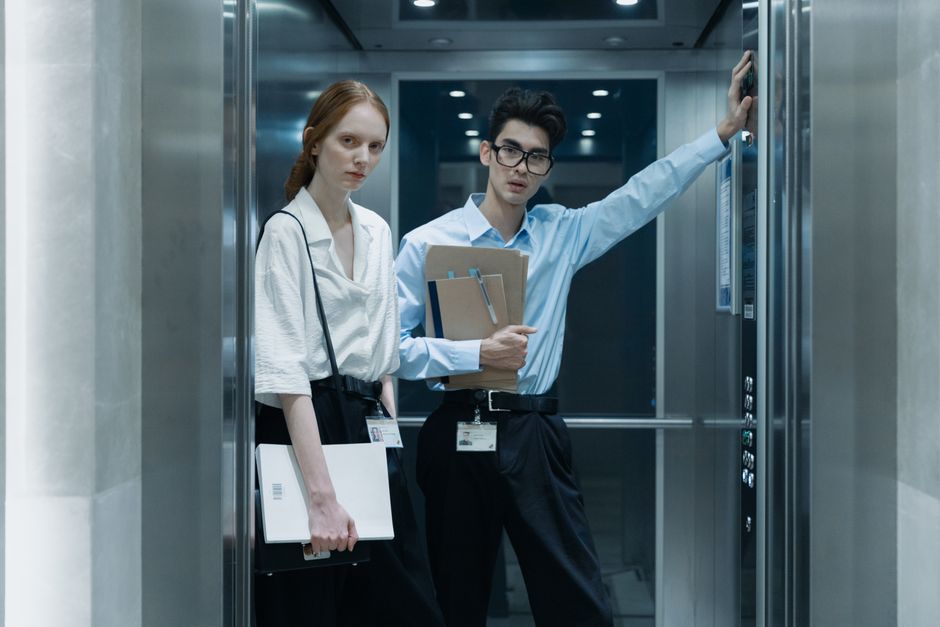
- Clothes that do not fit. A $500 blazer looks cheap if the shoulders are off. A $70 blazer looks expensive if it fits correctly. Fit is the only variable that matters more than brand. Tailoring a blazer costs $20–40 and changes the entire outcome.
- Strong fragrance. Perfume and heavy hairspray are a real problem in small conference rooms and elevators. Wear nothing, or one light application two hours before you leave — not right before you walk in the door.
- Distracting jewelry. Statement earrings that catch light and move, stacked bangles that make noise — these pull attention away from your face and what you are saying. One simple pair of earrings. That is the ceiling for an interview.
- Wrinkled or lint-covered clothes. Steam the outfit the night before. Keep a lint roller in your bag and use it in the elevator. This disqualifies more candidates than it should, and it is the easiest problem to solve.
- Wearing the outfit for the first time on interview day. Wear it once beforehand, for a few hours. You need to know if the waistband digs in after an hour of sitting, or if the blazer pulls when you reach across a table. Discovering that problem during the interview itself is not recoverable.
A sixth worth naming: following current fashion trends too literally. Bold seasonal colors, fashion-forward silhouettes, and very current cuts read stylish to some interviewers and tone-deaf to others. At an interview, the stakes are too high to find out which type you got. Stick to classics — navy, charcoal, cream, camel. None of them age badly in a single season.
When You Do Not Know the Company Dress Code

Dress one level up from what you think the company wears. Always. If you are wrong and overdressed, you look prepared. If you are wrong and underdressed, you look like you did not care enough to research the role.
How to research before committing to an outfit
Check the company’s LinkedIn page — not just the company itself, but the individual profiles of people who work in the department you are interviewing for. Look at photos from company events or team pages on their website. Glassdoor interview reviews sometimes mention dress code explicitly in the interview experience section.
If you have a recruiter contact, email them: “Could you give me a sense of the dress code for the office?” They will tell you. It is a professional question and they field it constantly. No recruiter has ever penalized a candidate for asking it.
Remote and hybrid first-round interviews
Still dress fully. Not because anyone will see your trousers on a video call, but because how you dress affects how you carry yourself on camera. Wear the blazer. Keep the neckline clean and structured. Avoid busy patterns — they distort on video and become visually distracting to the person trying to evaluate you.
Solid colors perform best on screen. Navy, dusty blue, burgundy, and deep teal read authority without washing out under office lighting the way white does, or reading too harsh the way black sometimes does on lower-quality cameras.
The right interview outfit does not guarantee the job. But the wrong one can cost it. Wear the navy blazer, get the fit right, and let the block heel carry the polish. Then focus entirely on the actual interview.