You leave home in straight-leg trousers, change into a midi dress after work, and discover the same boots look awkward with both. The shaft bunches under your trouser hem. The dress falls at the widest part of the boot. You spend the day tugging at fabric instead of enjoying the outfit.
The best solution is a mid-calf boot with a clean shaft, a moderate opening, and a sole that does not overpower lighter clothing. For most wardrobes, choose a boot that ends 28 to 35 centimetres above the floor, has a 3 to 6 centimetre heel, and leaves roughly 1 to 2 centimetres of room around the lower calf. Those measurements create enough structure for trousers without making dresses look heavy.
Match the boot shape to your trouser cut
Use a narrow shaft with straight and slim trousers
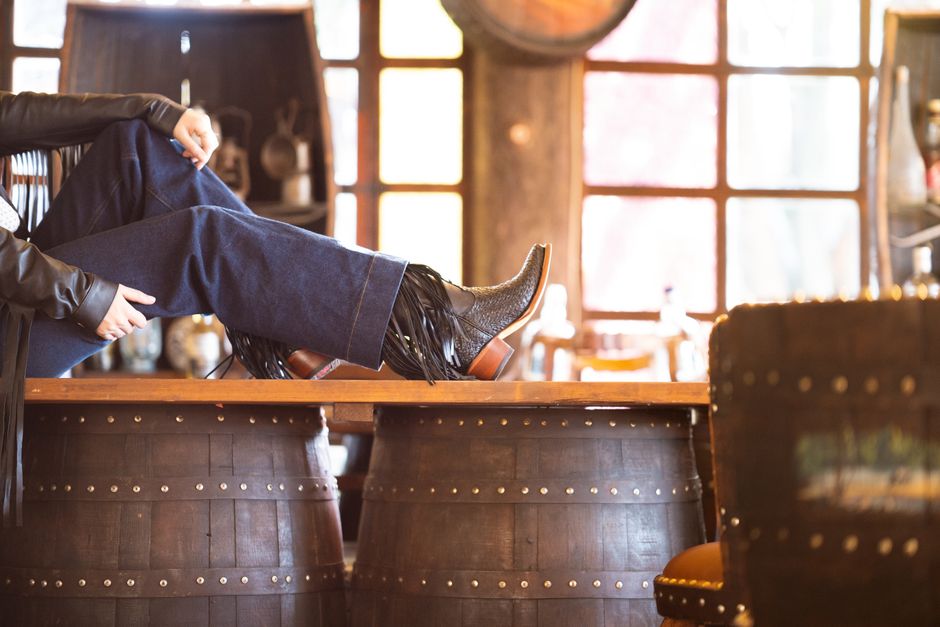
Straight-leg trousers work best with a boot that has a close shaft and a rounded or softly squared toe. The trouser hem should either skim the top of the boot or stop 1 to 3 centimetres above it. If the hem rests halfway down the shaft, the fabric will bunch and make the leg look shorter. For slim trousers, tuck the hem only when the shaft is wide enough to avoid a ridge showing through the leather.
Give wide-leg trousers room to move
Wide-leg trousers need a stable sole and enough toe length to keep the hem from catching. The boot itself can be slimmer because the trouser leg hides most of the shaft. Aim for a heel that lifts the hem 3 to 6 centimetres from the floor. A flat boot under a full wide leg often leaves excess fabric dragging at the back. That is a trouser-length problem, not a boot problem.
| Trouser cut | Best boot profile | Hem position | Common mistake |
|---|---|---|---|
| Slim ankle trouser | Close shaft, almond toe | 1 to 3 cm above boot | Leaving a loose shaft visible |
| Straight leg | Moderate shaft, low heel | Skimming boot top | Creating a fabric ridge |
| Bootcut | Pointed toe, 4 to 6 cm heel | Nearly floor length | Wearing a flat sole |
| Wide leg | Firm sole, longer toe | 1 cm above floor | Letting the hem drag |
The clear winner for a mixed trouser wardrobe is a dark leather boot with a moderate shaft and a 4-centimetre heel. It works with straight and bootcut styles without demanding a separate pair for every hem.
For dresses, heel height and visual weight matter most
Choose a moderate heel for midi and maxi lengths
A 3 to 6 centimetre heel gives a dress enough lift without turning a practical boot into a formal shoe. The heel also prevents a midi hem from sitting directly on the boot’s widest visual area. Block heels look especially balanced with cotton poplin, denim, wool, and heavier knits. A slim heel suits satin or fine jersey, but it needs a sleek shaft and a narrow toe to avoid looking disconnected from the dress.
Balance the boot with the dress fabric
Light dresses need a boot with a smooth finish, a narrow sole, and limited hardware. Heavy boots can still work, but repeat their weight elsewhere with a leather belt, structured bag, or cropped jacket. Chunky lug soles suit sweater dresses and denim dresses because both fabrics can hold their own. They look less convincing with a thin floral dress unless the outfit has a deliberate contrast.
My strongest styling opinion: a simple black or dark brown mid-calf boot with a 4-centimetre block heel is the most useful choice for dresses. It gives enough height, handles opaque tights, and does not compete with a printed hem.
Keep the gap between boot and dress intentional. A 5 to 10 centimetre strip of leg can look sharp with a shorter midi. For a calf-length dress, matching tights to the boot creates a longer line. If the dress hem lands exactly where the boot begins, the outfit can look chopped in half. Move the hem or add tights instead of hoping accessories will fix the proportion.
Four mid-calf boots with useful real-world tradeoffs

The best balanced option: Vagabond Shoemakers Marja
Its low block heel and almond toe keep it office-friendly, while the smooth leather does not look too polished with denim. Choose it in black for the widest wardrobe range. It is the best overall pick for someone who wants one boot for five days of outfits.
The best casual options: Sam Edelman Laguna and Blundstone 585
It works best with sweater dresses, straight jeans, and utility trousers. The tradeoff is visual weight: it can overwhelm a thin slip dress. Its elastic panels make it easy to wear, but its shorter shaft may not create the same long line under a midi dress.
The strongest statement choice: Dr. Martens 1B60
The Dr. It has a much heavier sole and a stronger identity than the other choices. That makes it excellent with denim, leather, and loose knit dresses. It is not the right single pair for a polished work wardrobe or delicate fabrics. Buy it when you want the boot to lead the outfit.
The final verdict is simple: choose the Vagabond Marja for the broadest mix of trousers and dresses. Pick the Laguna or 1B60 only when casual weight is part of your style.
What usually goes wrong with mid-calf boots?
Why does the boot make my legs look shorter?
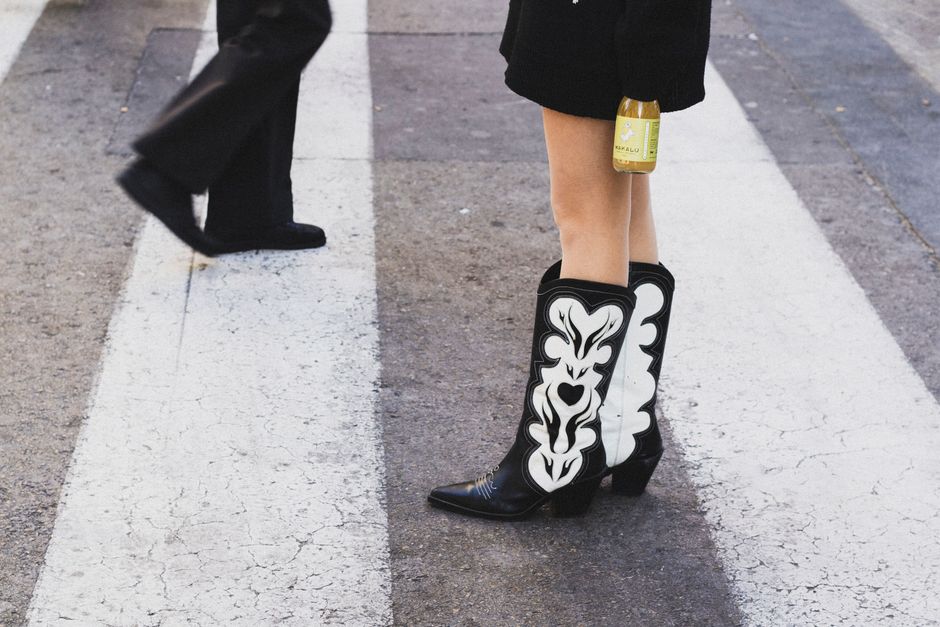
The usual cause is a horizontal break at the widest part of the calf. A pale boot with a dark dress creates a strong line, especially when the hem lands just above the shaft. Match tights to the boot, move the hem by a few centimetres, or choose a darker boot. A pointed or almond toe also helps extend the foot visually.
When should I skip mid-calf boots?
Skip them when your wardrobe is built around very short skirts, very wide cropped trousers, or delicate floor-length dresses. An ankle boot may give short skirts a cleaner finish. A knee-high boot may work better under long skirts because it removes the visible gap. Mid-calf boots also make a poor choice for very wet climates when the pair has an untreated leather sole and an open side zip. In that case, choose a waterproof Chelsea boot or a rubber riding-style boot.
Another mistake is buying a dramatic boot and expecting it to behave like a neutral one. A thick platform, bright colour, western stitching, or heavy buckles can look excellent, but those details reduce outfit range. The Dr. Martens 1B60 is a strong style choice, not a quiet basic. The Blundstone 585 is easier to repeat, but its shorter shaft does less to bridge the gap between a midi hem and the ankle.
Do not buy the category by trend alone. Buy it when your trousers need more coverage than an ankle boot and your dresses need more structure than a sneaker. That is the real job of the mid-calf shape.
Build the right one-boot wardrobe
Choose based on your most repeated outfit
If you wear tailored trousers and midi skirts most often, choose black smooth leather, an almond toe, and a 4-centimetre block heel. The Vagabond Marja is the clearest match because its shape stays quiet under trousers and polished beside a dress. If you wear denim, cargo trousers, and sweater dresses, choose the Sam Edelman Laguna. Its lug sole gives casual clothes enough weight, and the lower shaft is easier to style with rolled or cropped hems.
Match the boot to your weather and walking needs
For long commutes, a stable sole matters more than a sharp heel. The Blundstone 585 is the strongest everyday pick for casual wardrobes because the elastic sides make repeated wear easy. For cold weather and bold outfits, the Dr. Martens 1B60 has the most presence, but it needs breaking in and can feel heavy on stairs. A polished wardrobe should avoid buying a statement sole as its only pair.
Before you buy, lay out three trousers and three dresses from your closet. The boot should make at least four of those six outfits look better, not merely acceptable. If it works only with one dress and one pair of jeans, the problem is not your styling ability. The boot has too narrow a role.
That is how the original morning problem gets solved. The right mid-calf boot does not force a choice between trousers and dresses. It sits at a useful height, clears the trouser hem, supports the dress proportion, and stays comfortable after you leave the mirror. For most people, that means a dark, smooth boot with a moderate heel and a close shaft: quiet enough for work, strong enough for weekends, and reliable when the outfit changes halfway through the day.